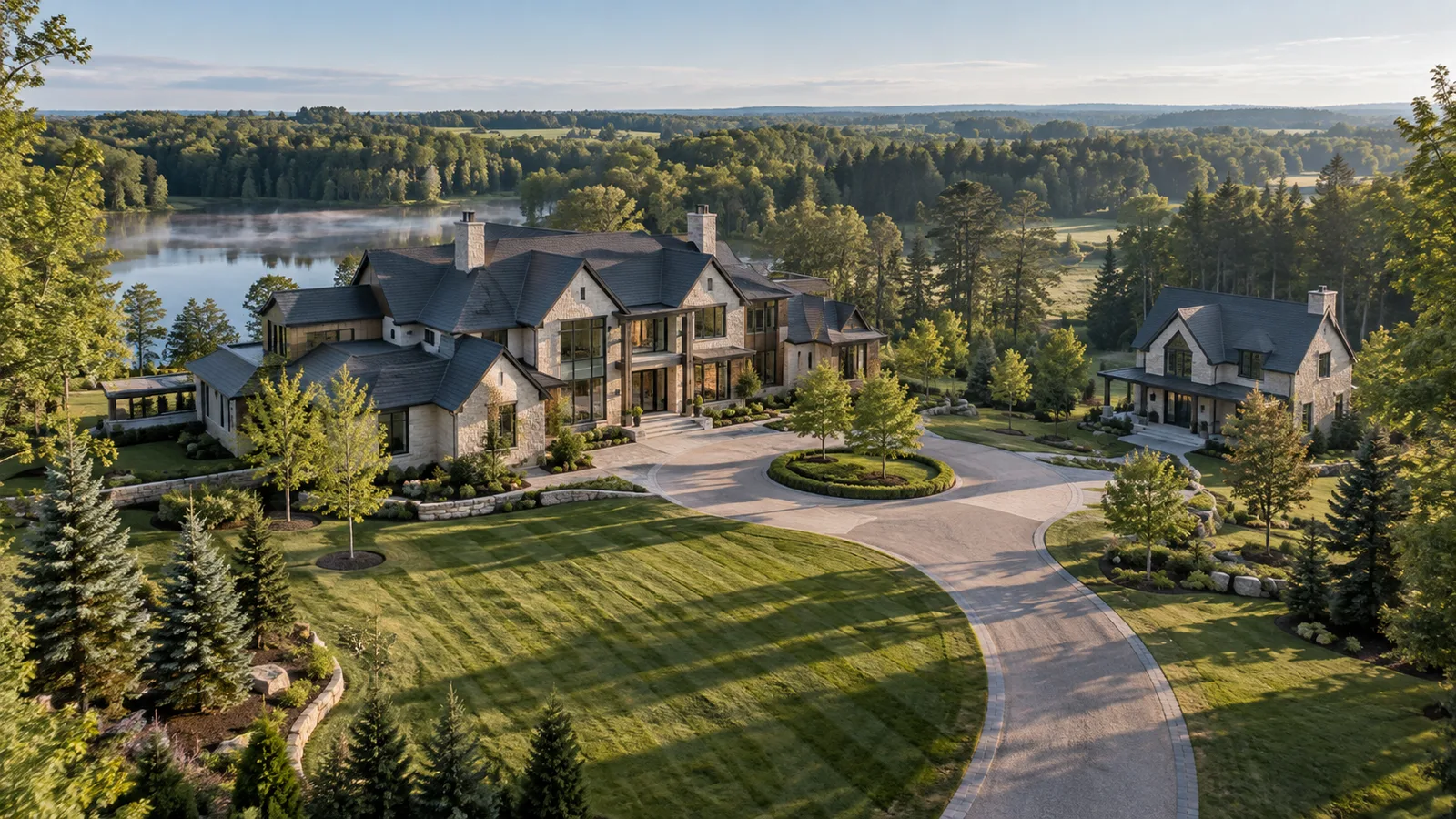
The luxury housing market is playing by a different set of rules this year. As affordability squeezes buyers in the middle, the top of the market keeps growing. Here’s what’s actually driving that divide — and what it means for buyers and sellers at the high end.
1. The wealth divide is widening
Luxury agents are seeing a split within their own client base. Nearly two-thirds now report an increase in all-cash purchases from a year ago — a sign that ultra-high-net-worth buyers, insulated from financing costs, are accelerating deals while buyers just below that tier hold off for rate clarity. Roughly a quarter of luxury specialists call this wealth divide one of the defining stories of the year.
2. “Landmaxxing” — buyers want the whole block, not just the house
Privacy and control have become the new status symbols. Searches for estates, châteaux, castles, historic properties, and private islands jumped 146% year over year, and land searches rose 97%. Some buyers aren’t stopping at the property line — they’re buying adjacent parcels to control who ends up next door, preserve a view, or assemble a true family compound.
3. Multigenerational living is now a mainstream luxury feature
Nearly one in five U.S. home purchases now involves buyers planning to live with relatives beyond their immediate household — often grandparents who help fund the purchase. Detached guest houses, adjoining apartments, and dual primary suites are shifting from nice-to-have to design requirement, especially for Gen X and millennial buyers managing young kids and aging parents at once.
4. International buyers are back in a big way
After several quiet years, foreign interest in U.S. luxury real estate has surged. Global searches for U.S. luxury property jumped 100% in the first five months of the year, and Sotheby’s reports a 44% rise in foreign-buyer activity. New York draws the most international inquiries, but Florida and California are both seeing renewed interest from overseas capital.
5. The home as a wealth strategy, not just a lifestyle purchase
The biggest mindset shift: affluent buyers increasingly treat real estate as core to their financial strategy rather than a discretionary lifestyle purchase. Analysts call it “nest investing” — reallocating wealth toward the home the way one would toward a diversified portfolio. Home-related spending among ultra-high-net-worth households is projected to rise more than 18% this year, potentially outpacing spending on cars, jewelry, and travel.
The bigger picture
Roughly $6 trillion changed hands through inheritance in the past year alone, and that generational wealth transfer is becoming one of the strongest demand drivers in luxury real estate. Combine it with returning international capital and a widening gap between cash-rich and financing-dependent buyers, and the luxury segment looks less like an extension of the broader housing market and more like its own asset class — remarkably resilient even as the rest of the market waits out higher rates.
Curious how these national trends show up closer to home? Read the companion piece on Metro Detroit’s luxury market — or try the free Michigan Home Score™ tool.
This article was supplied to LuxMichigan News by the author.
Download the submitted article collection